$170B of AI data centres blocked, withdrawn or stalled: inside the speculation backlash
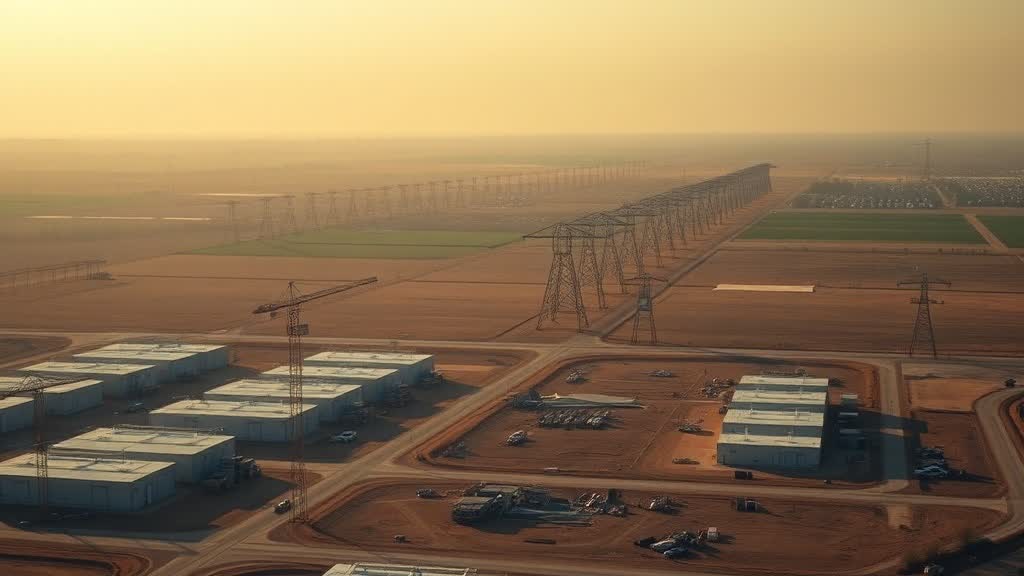
The AI buildout is colliding with local politics, and the mismatch is measurable. More than $170 billion in announced US AI data centre capacity has been blocked, withdrawn or stalled — against roughly $581 billion in expected hyperscaler spend this year alone.
- The blocked capacity figure — Relae, formerly Carbon Direct, said in June 2026 that more than $170 billion in AI data centre capacity has been blocked, withdrawn or stalled by community opposition since January 2024.
- The spending it sits against — Goldman Sachs Research estimates about $1 trillion of AI-related investment globally in 2026, including $581 billion in the US — an upward revision of the commonly cited hyperscaler capex number by roughly $200 billion.
- Utilities are changing the rules — Large-load tariffs and other vetting measures are taking shape to separate speculative requests from real projects, as community opposition has become a major barrier alongside labour shortages, equipment lead times and limited power availability.
Every AI infrastructure story is told in the present tense: capital is flowing, land is secured, power is contracted. The story that surfaced this week from the utility and data centre trade press is about the part of that flow which never arrives — and it has a number attached.
Reporting is from Data Center Knowledge's September 25, 2026 piece, which credits Utility Dive and is co-published with them. Two caveats before you quote the headline figures. First, the original Utility Dive article returns HTTP 403 to automated readers, so it was read here only through the DCK republication. Second, the $170 billion figure originates in a June 2026 Relae study and the $581 billion in an August 2026 Goldman Sachs Research report — both are cited inside this week's reporting, not published this week. The news is the utilities changing policy; the numbers are context.
The gap, stated plainly
More than $170 billion in AI data centre capacity has been "blocked, withdrawn, or stalled" by community opposition since January 2024, according to the energy advisory company Relae, formerly Carbon Direct, which said this in June 2026.
Set that against the money. Goldman Sachs Research, after adjusting the widely quoted hyperscaler capex numbers for private companies, non-US firms and non-AI spending, estimates roughly $1 trillion of AI-related investment worldwide in 2026, of which about $581 billion lands in the US. The commonly cited hyperscaler capex forecast of $794 billion understates global AI capex by around $200 billion while overstating US investment by a similar amount.
So the blocked-and-stalled figure is not a rounding error against the buildout. It is a material fraction of a single country's annual AI infrastructure spend, accumulated across two and a half years. The Goldman piece is careful to say its own estimates rely on assumptions that are hard to verify, and that risk of double-counting exists where companies do not separate property, plant and equipment spending from financial leases. Treat both numbers as order-of-magnitude, not precision.
Why projects die before the first concrete pour
Data Center Knowledge's reporting lists the barrier set: community opposition, construction labour shortages, long lead times for critical electrical equipment, limited power availability in key markets, and — the one that undercuts everything else — uncertainty around consumer demand for AI tools.
That last one matters most for the speculative tail. A utility cannot distinguish a developer who has power, land, water and a signed customer from a developer who has filed an interconnection request and nothing else. Both present identically at the planning stage. When the second one fails to build, the first one may be behind it in the queue.
The industry is responding by writing the demand in stone
The reporting's central point is not that the boom is ending — market analysts reportedly see no sign of that — but that the filtering mechanism is changing. Large-load tariffs and other measures designed to weed out speculative projects are taking shape across the US, alongside shifting state-level policy.
Read that as utilities repricing risk rather than rejecting demand. A large-load tariff makes speculative requests expensive to hold, and a capital commitment from a customer with a real balance sheet looks very different from a letter of intent. Expect the practical effect to be a longer, harder diligence conversation before a site is treated as real — which slows announced timelines without slowing real buildout.
What the hyperscalers are doing about the power side
The demand being defended is not hypothetical. At Data Center World Power 2026 in Houston, held September 21–23, Google's Tom Garvens, vice president of advanced technology innovation, said Google now processes more than 3 quadrillion AI tokens per month, a sevenfold increase in compute demand from May 2025 to May 2026.
The engineering response is to stop treating a data centre as a load and start treating it as a participant in the grid. According to DCK's September 25 report, Google's campus designs now lean on battery energy storage systems for onsite energy and for buffering fast-fluctuating workloads; backup generators remain but diesel "does not scale well to campuses at 1 GW and beyond." Google has also moved away from centralised UPS systems toward rack-level battery backup around 54 VDC, which Garvens said yields roughly a 1.5% efficiency gain by removing an AC-DC-AC conversion step. Racks are anticipated to approach 1 MW each over the next year or two, pushing the distribution voltage toward 800 VDC — a migration DCK expects to take a couple of years to mature.
And on the interface problem itself, Garvens said Google, Meta, Microsoft and Nvidia "have come together to define an interface spec on how utilities and hyperscalers can interface with each other."
For anyone planning to build: the bottleneck is no longer money and it is not chips. It is a local grid queue and a community vote. Site selection now deserves the diligence effort that model selection gets.
For anyone forecasting AI capacity: announced megawatts are not delivered megawatts. Discount them for the stalled tail, and treat a signed utility agreement as the real gating signal rather than a press release.
For the industry: the sevenfold compute-demand growth Google described is the demand curve; the $170 billion is the cost of getting that curve connected. Both are real, and they are pulling against each other.
Bottom line: the AI infrastructure buildout is not being cancelled — it is being filtered. Capital keeps arriving faster than substations and public consent can absorb, and the gap between the two is showing up as stalled projects, new utility tariffs, and a hyperscaler-utility interface spec that did not exist a year ago. The buildout's constraint has moved from capital to permission.
- Data Center Knowledge / Utility Dive — Efforts to Curb Data Center Speculation Gain Ground Across the US (September 25, 2026)
- Data Center Knowledge — Google's Grid-Interactive AI Data Centers: From Backup to Grid Partner (September 25, 2026)
- Goldman Sachs Research — Global AI Investment Is Forecast to Exceed $1 Trillion in 2026 (August 7, 2026)
- Relae (formerly Carbon Direct) — community opposition to AI data centers: lessons learned
Prices and benchmark figures are standard published rates as of September 27, 2026 and can change without notice. Some outbound links may be affiliate links — see our disclosure. Found an error? Tell us and we'll correct it in public.