Snowflake Business Ontology and Cortex AI Gateway Guide
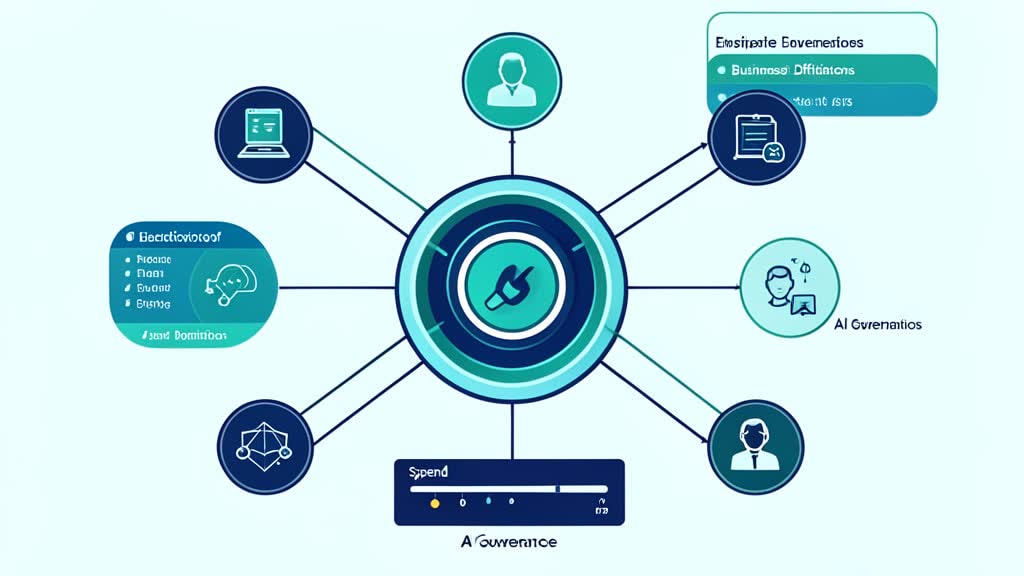
At Snowflake Expedition 2026 on November 3, the company announced Business Ontology and an expanded Cortex AI Gateway, plus new CoCo and CoWork agent capabilities. The pitch is that enterprise AI fails less because of model quality than because of missing business context and missing control over what agents may call, and Snowflake is selling both fixes inside its data platform.
- Business Ontology is public preview soon — Business Ontology, part of Snowflake Horizon Context, lets teams approve official definitions such as net revenue and link them to underlying tables and views, and serves only approved definitions to agents.
- Cortex AI Gateway is generally available — Cortex AI Gateway applies one set of authentication, permissions and policies to agent connections across clouds, frameworks and providers, with spend attributed to users, teams and agents plus hard limits.
- Context is the top blocker — In MIT Technology Review Insights research sponsored by Snowflake, 55% of executives cite a lack of business context as the primary reason agent insights fall short, and 45% cite fragmented or inaccessible data.
- Abuse detection reads full trajectories — Snowflake's Agent Abuse Detection, in private preview, analyses complete agent trajectories rather than individual prompts, pairing efficient screening with context-aware reasoning.
What Snowflake announced at Expedition 2026
Related guide: IBM and Microsoft Launch Imagine Enterprise Agent Platform
Snowflake's message at its November 3 event was that governance has to be in place before agents reach production, not after an incident forces the issue. Two headline capabilities sit inside Snowflake Horizon Catalog, and both target problems that arrive the moment an agent leaves the chat window and starts touching real systems.
Business Ontology is a new capability inside Horizon Context. It is where teams approve official definitions for business concepts and link them to the underlying tables and views that implement them, so the definition persists across every tool that touches the data. Cortex AI Gateway is the front door for agent connections: one place where authentication, permissions and existing organisational policies are applied to how agents reach models, invoke tools and act on enterprise systems, regardless of which cloud, framework or model provider sits behind the call.
Both products feed Snowflake's own agents. CoCo, its coding agent for data teams, and CoWork, its personal work agent for knowledge workers, consume the approved business concepts so their answers resolve to the definition the business signed off on rather than one of several competing versions.
Business Ontology: one definition per business term
Related guide: Businesses in ChatGPT: Business Hub and Business Agents
The problem being sold against is familiar to anyone who has run a reporting function. A dashboard says one thing, an analyst says another, and an AI agent asked for a net revenue report gives a third, because each is reading a different definition from a different source. The fix Snowflake proposes is to give every definition an accountable owner, attach it to the data that implements it, and make that approved version the answer every agent returns.
Three pieces work together here, according to Snowflake. Business Ontology governs the official meaning of a term. A Semantic View calculates it. Cortex Sense infers the operational knowledge nobody wrote down, but human-approved ontology definitions always take precedence over competing inferences. Out of the box, Horizon Context connectors collect schemas, query logs, dashboard definitions and usage signals from sources such as Tableau, Power BI, dbt, SQL Server and PostgreSQL, then enrich that metadata with lineage, automated tags and AI descriptions.
Migration is the part most teams will care about. Snowflake says organisations that keep definitions in a third-party catalog or a spreadsheet can migrate them in a single guided CoCo session, which pulls out domains, candidate terms, relationships and linked data assets and marks everything as a draft for owners to approve. ETEnterpriseAI reported Snowflake's India managing director's framing: only approved definitions are served to AI agents, so agents answer from the definition the business signed off on instead of choosing among competing versions.
Cortex AI Gateway: one control plane for every agent
Related guide: Google's Gemini Agent: A Universal Work Agent for Cloud and Workspace
The gateway covers four jobs that usually fragment across tools. First, governance of model access and spend: cost governance attributes AI spend to any user, team, department, agent or app and enforces hard limits, while dynamic model routing matches each request to an organisation-approved model based on cost, accuracy and latency, keeping routine work off the most expensive models. Second, tool control: Cortex AI Gateway Tools authenticates and validates every agent tool call across cloud, SaaS and private VPCs against fine-grained authorisation policies before it executes, with identity propagation and an audit trail.
Third, execution safety. Cortex Sandboxes gives agents a private space to run custom code next to company data, following the exact permissions of the person running the agent and shutting down automatically when finished. Agent Abuse Detection, in private preview, analyses complete agent trajectories rather than individual prompts to catch agents operating beyond their permissions and employees using agents to bypass approvals or exfiltrate data. Snowflake says it also served as a technical design partner with OpenAI on Private Safety Processing, a whitepaper it links for more detail.
Fourth, the record. Observability, which Snowflake marks generally available, records what every agent did — models called, tools used, decisions made — in the customer's own Snowflake account rather than a vendor's. Agent Trace Intelligence, in private preview, lets teams query those traces against business data to find agents burning money in loops, failing tools and the real cost of each completed task. Cortex AI Guardrails, public preview soon, applies account-wide runtime protection against prompt injection, jailbreaks and novel attacks to every agent routed through the gateway, including third-party agents.
What the research says agents get wrong
Related guide: Google AI Mode Hits 1 Billion Monthly Users: What Search's Agent Actually Does
Snowflake commissioned MIT Technology Review Insights to survey 400 chief data and analytics officers, chief information officers, chief technology officers, chief AI officers and other senior executives in July and August 2026, across eight industries, with all respondent organisations earning 500 million dollars or more in annual revenue. The report is the argument the product announcements are built on.
- 48% of agent-generated insights lead to actions that improve the business, up from 37% a year earlier.
- 55% of executives cite a lack of business context as the primary reason agent insights fall short; 45% cite fragmented or inaccessible data.
- 83% rate their agents' descriptive insights as good or excellent, but only 45% say the same about prescriptive insights — recommendations on what to do next.
- Only 24% of organisations can evaluate all the insights their agents generate, and 53% expect automated evaluation by AI agents to be their primary method within two years, up from 29% today.
Two caveats belong next to those numbers. The survey was sponsored by Snowflake, which sells the product the findings justify, and it measures executive opinion rather than agent performance. That does not make the numbers wrong, but it does mean the 55% figure is a perception of a cause, not a measurement of one.
What is available, and what is not
Related guide: One robots.txt Line for AI Training Opt-Outs: What Four AI Labs Agreed To
Snowflake's footnotes are unusually specific, and they are the part to read before planning anything:
- Generally available: Cortex AI Gateway and its observability capability.
- Public preview: Cortex AI Gateway Tools for MCP tool governance, and Cortex AI Guardrails.
- Public preview soon: Business Ontology and Cortex Sense.
- Private preview: Cortex Sandboxes and Agent Trace Intelligence.
- In development: the OpenAI Private Safety Processing integration.
In other words, the piece that carries the marketing weight — approved business definitions reaching every agent — is not generally available yet, while the piece enterprises can adopt today is the control plane around models, tools and spend.
Who should care, and what to do about it
Related guide: Anthropic: Multi-Agent Teams Often Underperform One Agent
The pattern in the announcements is the same one that shows up across enterprise agent platforms: the hard part is not the model, it is the boring layer of definitions, permissions, audit trails and budgets around it. If you are running agents against real data today, the practical question is whether two agents in your stack can disagree about what a core metric means, and whether you could reconstruct last Tuesday's tool calls after the fact.
Both announcements point at the same answer. Treat the definitions layer as infrastructure rather than documentation, and route agent connections through a single gateway that applies the access policy the human user already has. Snowflake's bet is that this belongs next to the data, inside the same security boundary, rather than in a separate governance tool. Whether the product delivers on that promise depends on preview features that are not yet broadly available, so the sensible move is to watch the Business Ontology path to general availability while adopting the parts that are already GA.
Frequently asked questions
Business Ontology is public preview soon
Business Ontology, part of Snowflake Horizon Context, lets teams approve official definitions such as net revenue and link them to underlying tables and views, and serves only approved definitions to agents.
Cortex AI Gateway is generally available
Cortex AI Gateway applies one set of authentication, permissions and policies to agent connections across clouds, frameworks and providers, with spend attributed to users, teams and agents plus hard limits.
Context is the top blocker
In MIT Technology Review Insights research sponsored by Snowflake, 55% of executives cite a lack of business context as the primary reason agent insights fall short, and 45% cite fragmented or inaccessible data.
Abuse detection reads full trajectories
Snowflake's Agent Abuse Detection, in private preview, analyses complete agent trajectories rather than individual prompts, pairing efficient screening with context-aware reasoning.
- Snowflake — Snowflake Helps Enterprises Deploy AI Agents with Trusted Business Context and Built-In Controls (November 3, 2026)
- MIT Technology Review Insights / Snowflake — Putting Agentic Analytics to Work
- ETEnterpriseAI — With Ontology, Snowflake wants enterprise AI agents to understand business context before they act (November 3, 2026)
Prices and benchmark figures are standard published rates as of November 12, 2026 and can change without notice. Some outbound links may be affiliate links — see our disclosure. Found an error? Tell us and we'll correct it in public.